Health Benefits of Sunflower Seeds: Nutrition, Uses, & How to Eat Them Right

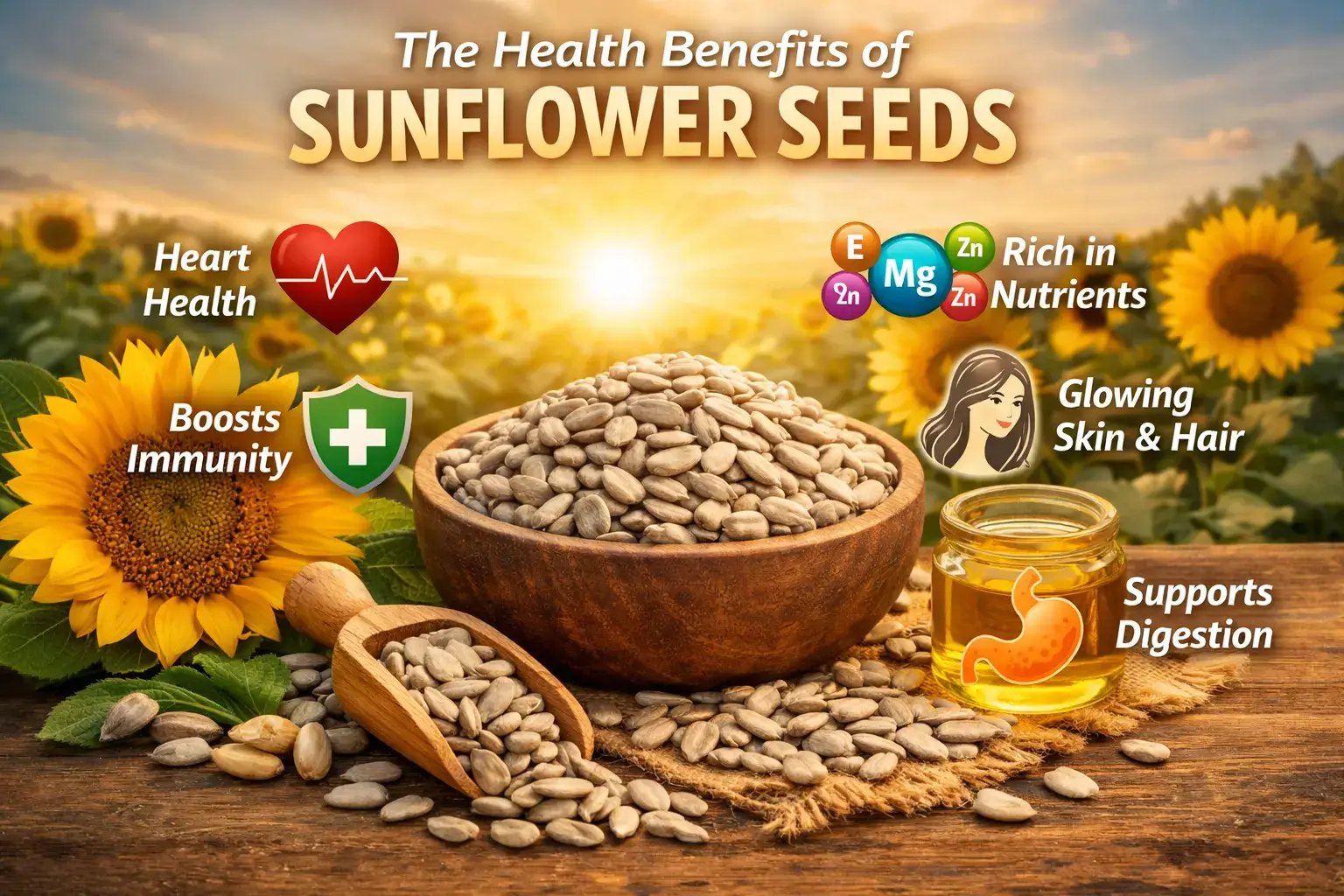
Sunflower seeds may look small to you, but they are one of the most powerful natural foods that you can add to your daily diet. Packed with nutrients, healthy fats, vitamins, and minerals, these seeds have been used for centuries for energy, heart health, skin glow, and overall wellness.
Today, science strongly supports what traditional diets already know: the health benefits of sunflower seeds are real and suitable for people of all ages when eaten correctly.
In this blog, we will explore everything you need to know about the health benefits of sunflower seeds.
Let’s start with the basics…
What are Sunflower Seeds?
Sunflower seeds come from the center of the sunflower plant (Helianthus annuus). These seeds are commonly eaten raw, roasted, or added to foods like salads, smoothies, granola, and bread.
There are two main types of sunflower seeds:
- Oilseed sunflower seeds: These seeds are mainly used for sunflower oil.
- Non-oiled sunflower seeds: These seeds are commonly eaten as snacks or used in cooking.
Sunflower seeds are popular worldwide because they are easily affordable, easy to store, and provide nutrition to you.
What is the Nutritional Value of Sunflower Seeds?
One of the biggest reasons for the health benefits of sunflower seeds is their impressive nutritional benefits. Below are the some of the key nutrients in sunflower seeds:
- Healthy fats (polyunsaturated and monounsaturated fats)
- Protein
- Vitamin E (very high)
- Magnesium
- Selenium
- Zinc
- Iron
- B-complex vitamins
- Dietary fiber
You may not know, but just a small handful of seeds will provide you with long-lasting energy and essential nutrients for daily body functions.
Amazing Health Benefits of Sunflower Seeds
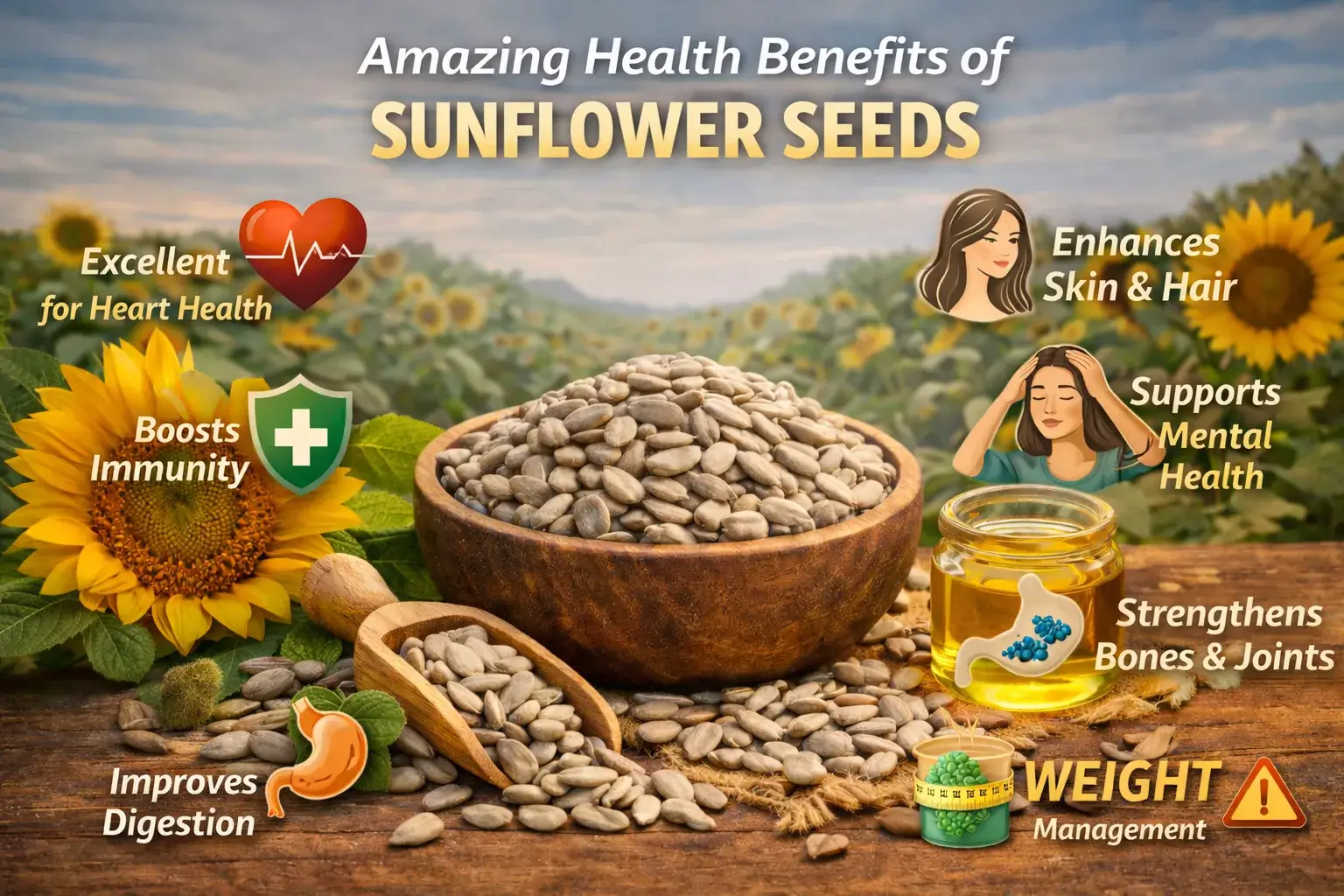
Let’s explore the major health benefits of sunflower seeds in detail.
— Excellent for heart health
Sunflower seeds are rich in heart-friendly nutrients, especially healthy unsaturated fats, magnesium, and antioxidants. These nutrients work together to support your cardiovascular system and keep your heart functioning efficiently.
According to a Study by National Institutes of Health, sunflower seeds help reduce bad cholesterol (LDL) levels in the blood while supporting good cholesterol (HDL), which is essential for keeping your arteries clear and flexible. The healthy fats present in these seeds prevent the buildup of plaque in blood vessels, lowering the risk of heart disease.
They also help regulate blood pressure due to their magnesium content, which relaxes blood vessels and improves blood flow. In addition, Seeds help reduce inflammation in blood vessels, which is a major contributor to heart-related problems.
Magnesium plays a key role in maintaining a stable and healthy heart rhythm, reducing the risk of irregular heartbeats and supporting overall heart health in the following ways:



- Reduces your bad cholesterol.
- Good cholesterol.
- Regulate your blood pressure.
- Reduces inflammation in your blood vessels.
— Powerful source of Vitamin E
Sunflower seeds are one of the richest natural sources of Vitamin E, a powerful antioxidant that protects your body from oxidative stress.
Vitamin E helps protect your cells from damage caused by free radicals, which can lead to aging and chronic diseases. It also improves skin health by keeping it moisturized and protected from environmental damage such as pollution and sun exposure.
In addition, Vitamin E supports a strong immune system, helping your body fight infections more effectively. It also plays a role in slowing down early signs of aging, such as fine lines and dull skin.
Because of these benefits, sunflower seeds are especially helpful for people experiencing dull skin, hair thinning, or frequent illnesses. The Vitamin E in sunflower seeds helps you through:
- Protecting your cells from getting damaged.
- Improving your skin health.
- Supporting your immune function.
- Slow down the signs of aging.
— Boosts your Immunity Naturally
Sunflower seeds provide essential minerals such as selenium, zinc, and antioxidants, all of which are crucial for a healthy immune system.
These nutrients help strengthen your body’s natural defense mechanisms, making it easier to fight bacteria, viruses, and infections. They also support faster recovery when you’re feeling weak or unwell.
Regular consumption of sunflower seeds can be particularly beneficial during seasonal changes, when immunity tends to weaken and the risk of colds and flu increases, which help you through the following:
- Strengthens your immune system.
- Helps you to fight infections.
- It supports you by helping you recover faster from illness.
— Supports your Brain and Mental Health
Sunflower seeds contain B-complex vitamins, magnesium, and healthy fats, which are essential for proper brain function and emotional balance.
These nutrients help reduce stress and anxiety, improve focus, and enhance memory. Magnesium, in particular, helps calm the nervous system and promotes relaxation, making sunflower seeds useful for people dealing with daily stress or mental fatigue.
Regular intake may also help improve mood regulation, supporting better emotional well-being and mental clarity. These seeds also provide mental health benefits to you, such as:
- Reduces your stress and anxiety.
- Improves your focus and memory.
- Makes your mood regulation better.
— Helps you Maintain Healthy Skin and Hair
Sunflower seeds are widely known for their beauty-boosting benefits. Their rich content of Vitamin E, healthy fats, and essential nutrients nourishes the skin and hair from within.
They help improve skin texture, add a natural glow, and reduce dryness. The antioxidants protect skin cells from damage and help delay premature aging.
For hair, sunflower seeds strengthen hair roots, reduce breakage, and support healthier hair growth. Over time, regular consumption can lead to stronger, shinier hair and clearer skin. These seeds provide you with the following skin and hair benefits:
- Improving your skin and making it glow.
- Reduces the dryness in your skin.
- Strengthens your hair roots.
- Help you prevent premature aging.
The Vitamin E and healthy fats nourish the skin from within, giving visible results over time.
— Supports Weight Management
Although sunflower seeds are calorie-dense, they can support healthy weight management when eaten in moderation.
Their high fiber content keeps you full for longer, reducing unnecessary snacking. The healthy fats help control cravings, while the protein supports muscle maintenance and boosts metabolism.
When included as part of a balanced diet, sunflower seeds can help you feel satisfied and energized without overeating. Here’s how to manage your weight:
- Contains high fiber, which keeps you full for long.
- Healthy fats, which reduce your cravings.
- Added protein that supports your muscle mass.
— Improves Digestive Health
Sunflower seeds are a good source of dietary fiber, which is essential for smooth digestion.
Fiber helps prevent constipation, improves bowel movement, and supports the growth of healthy gut bacteria. A healthy gut improves nutrient absorption and overall digestive comfort.
Eating soaked or lightly roasted sunflower seeds makes them easier to digest and more beneficial for your digestive system. Here are some digestive benefits that you will gets:
- Prevents constipation
- Improves your gut movement.
- Supports your healthy gut bacteria.
— Supports Bone Health
Sunflower seeds contain important minerals such as magnesium, phosphorus, and calcium, all of which are vital for strong bones and joints. Regular consumption helps maintain bone density, reduces the risk of bone weakening, and supports joint flexibility.
These benefits are especially important for aging adults and women, who are more prone to bone-related issues. Regular intake of sunflower seeds can help you with the following:
- Maintains your bone density.
- Reduces the risk of weakening of your bones.
- Supports your joint health.
— Helps control Blood Sugar Levels
For people with diabetes or insulin resistance, sunflower seeds can be a smart dietary addition when consumed in controlled portions.
They help slow down sugar absorption in the bloodstream, improve insulin sensitivity, and prevent sudden spikes in blood sugar levels. The fiber and healthy fats contribute to better blood sugar control. These seeds help you in the following ways:
- Slow down your sugar absorption.
- Improves your insulin sensitivity.
- Prevent you from sudden blood sugar spikes.
— Have Anti-Inflammatory Properties
Sunflower seeds contain antioxidants and beneficial compounds that help reduce inflammation in the body.
Regular intake may help people suffering from joint pain, arthritis, and chronic inflammation by easing discomfort and supporting overall joint health. These seeds help people who are suffering from:
- Joint pain
- Arthritis
- Chronic inflammation
What are the Best Ways to Take Sunflower Seeds?
Sunflower seeds are highly nutritious and versatile, making them easy to include in your daily diet. However, the way you consume seeds can affect how well your body absorbs their nutrients. Below are the best and healthiest ways to take sunflower seeds to get maximum benefits.
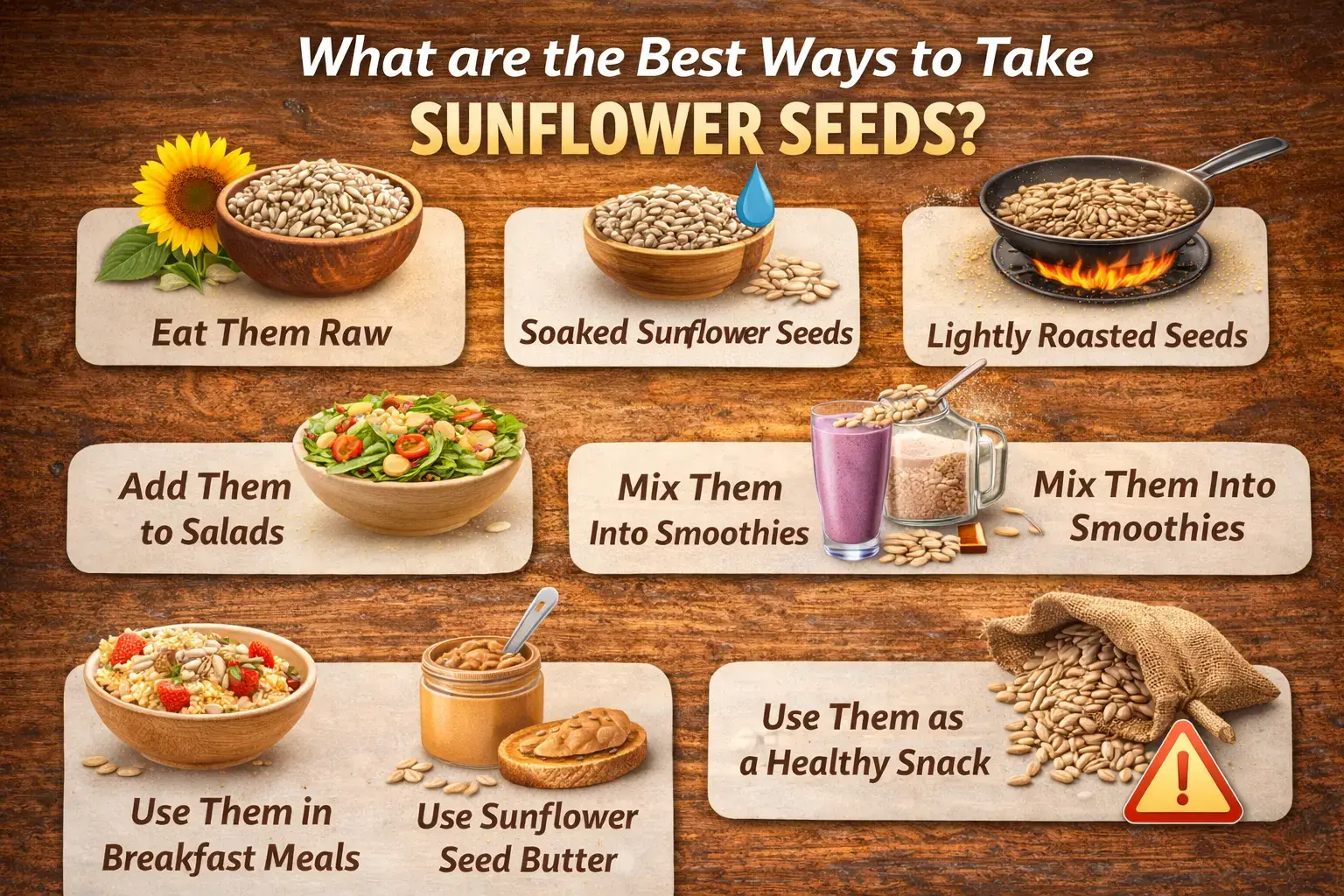
— Eat Them Seeds
Eating raw sunflower seeds is one of the simplest and most natural ways to consume them.
Raw seeds retain all their essential nutrients, including healthy fats, Vitamin E, magnesium, and antioxidants. This method is ideal for people who want maximum nutritional value without added calories or sodium.
However, raw seeds can sometimes be harder to digest for some people, so chewing them properly is important.
— Soaked Sunflower Seeds
Soaking sunflower seeds overnight is one of the best ways to improve digestion and nutrient absorption.
Soaking helps reduce natural compounds that may interfere with digestion and makes the seeds softer and easier on the stomach. It also activates enzymes that improve the availability of minerals like magnesium and zinc.
To soak them, place seeds in water for 6–8 hours or overnight, then rinse and consume them plain or add them to meals.
— Lightly Roasted Sunflower Seeds
Light roasting enhances the flavor and crunch of sunflower seeds while still preserving most of their nutrients.
Dry roast them on low heat without oil or salt to avoid unnecessary fats and sodium. Light roasting makes the seeds easier to digest and more enjoyable as a snack.
Avoid over-roasting, as high heat can destroy Vitamin E and healthy fats.
— Add Them to Salads
Sunflower seeds make a great topping for salads.
They add a crunchy texture along with protein, fiber, and healthy fats. Sprinkle raw or roasted sunflower seeds over vegetable salads, fruit salads, or grain bowls for a nutrient boost.
This is an easy way to include sunflower seeds in your meals without extra effort.
— Mix Them into Smoothies
You can blend sunflower seeds into smoothies for added nutrition.
Soaked sunflower seeds blend easily and add creaminess without altering the taste much. They increase the protein, healthy fats, and mineral content of your smoothie.
This method is especially helpful for people who don’t enjoy chewing seeds.
— Use Them in Breakfast Meals
Sunflower seeds can be added to many breakfast options.
You can sprinkle them over oatmeal, yogurt, cereal, or porridge. This helps increase fiber and energy levels, keeping you full for longer throughout the morning.
Starting your day with sunflower seeds supports steady energy and better digestion.
— Use Sunflower Seed Butter
Sunflower seed butter is a great alternative to peanut butter, especially for people with nut allergies.
It can be spread on whole-grain bread, added to smoothies, or used as a dip for fruits and vegetables. Sunflower seed butter provides the same heart-healthy fats and Vitamin E in a creamy, convenient form.
Choose unsweetened and additive-free versions for the healthiest option.
— Add Them to Cooking and Baking
Sunflower seeds can be used in cooking and baking to improve both nutrition and texture.
They can be added to homemade bread, muffins, energy bars, granola, or stir-fried vegetables. Using them in meals helps you consume a handful of seeds regularly without getting bored.
— Use Them as a Healthy Snack
Sunflower seeds make a great on-the-go snack.
Carry a small portion of roasted or soaked seeds to curb hunger between meals. Just be mindful of portion size, as sunflower seeds are calorie-dense.
A small handful per day is enough to enjoy their benefits.
How Much Sunflower Seeds Should You Eat?
For most people, 1–2 tablespoons per day is a healthy and safe amount.
Eating them in moderation helps you enjoy their benefits without consuming excess calories or fats.
Side Effects of Eating Sunflower Seeds in Large Amounts?
Sunflower seeds are nutritious and flavorful, offering healthy fats, protein, fiber, and essential vitamins and minerals. While they are beneficial when eaten in moderation, consuming sunflower seeds in large amounts can cause several health-related issues.
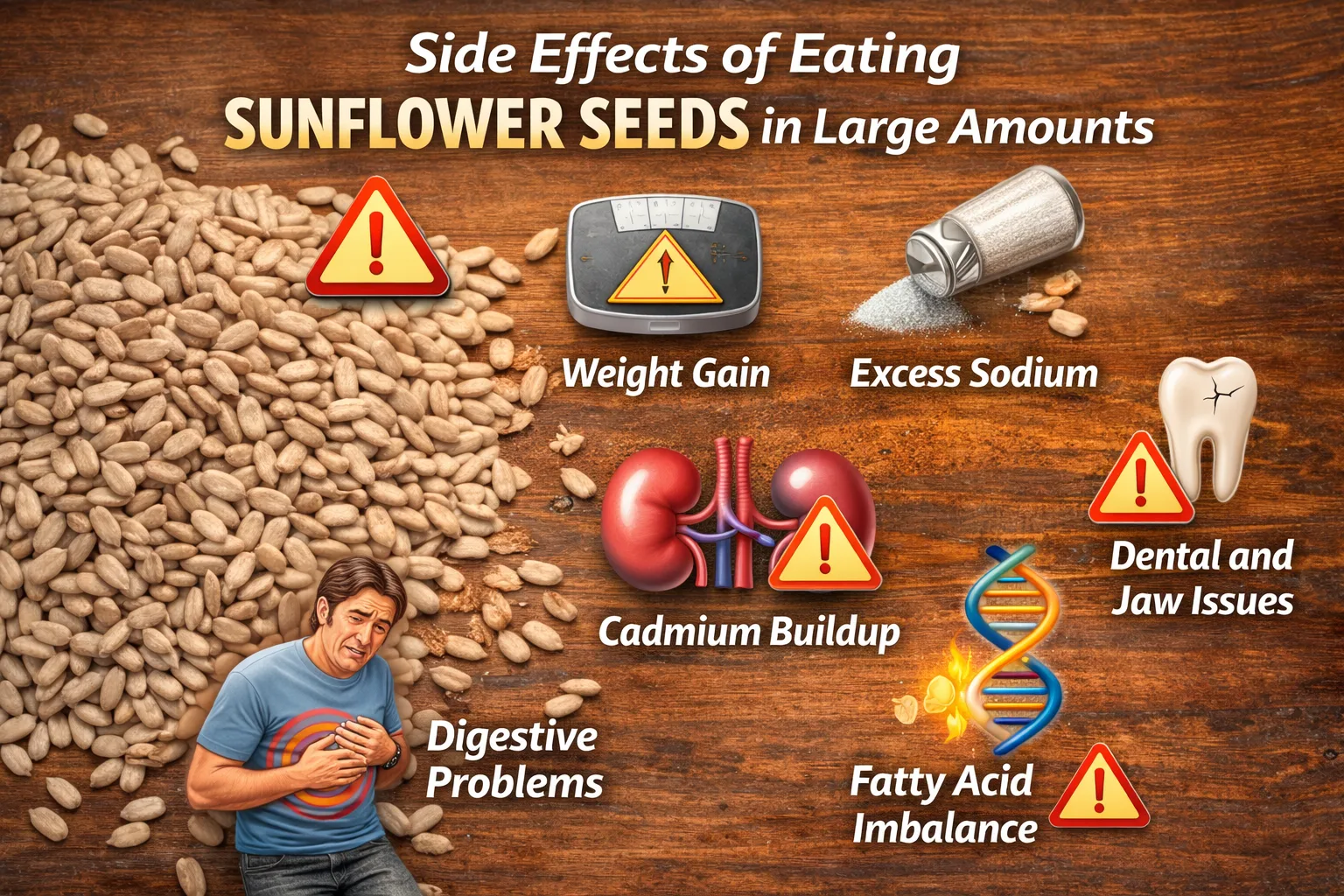
Below are the major side effects explained in detail, with key points summarized in bullet form for easy understanding.
1. High Calorie Intake and Weight Gain
Sunflower seeds are energy-dense because they contain a high amount of fats. Although these fats are mostly unsaturated and healthy, excessive consumption can lead to a significant increase in daily calorie intake. When the body consistently consumes more calories than it burns, the excess energy is stored as fat, which may result in unwanted weight gain over time.
- High in calories due to fat content
- Overeating can exceed daily calorie requirements
- May contribute to gradual weight gain
2. Excess Sodium Intake
Most packaged sunflower seeds are roasted and heavily salted to enhance flavor. Eating large quantities of salted seeds can lead to excessive sodium intake. High sodium levels can cause water retention, bloating, and increased blood pressure, and may raise the risk of cardiovascular diseases, especially in individuals with hypertension.
- Salted varieties contain high sodium levels
- Can cause bloating and water retention
- May increase blood pressure and heart disease risk
3. Digestive Problems
Sunflower seeds are rich in dietary fiber, which supports healthy digestion when consumed in moderate amounts. However, excessive fiber intake can overwhelm the digestive system, leading to bloating, gas, stomach cramps, constipation, or diarrhea. Consuming sunflower seeds with their shells may further irritate the digestive tract and worsen discomfort.
- High fiber content
- Excess intake may cause bloating and gas
- Eating shells can irritate the stomach and intestines
4. Cadmium Accumulation
Sunflower plants naturally absorb cadmium, a heavy metal found in soil. While small amounts are usually harmless, frequent consumption of large quantities of sunflower seeds may lead to cadmium accumulation in the body. Long-term exposure to high cadmium levels has been linked to kidney damage and weakened bones.
- It may contain trace cadmium
- Excessive intake can cause accumulation over time
- May affect kidney and bone health
5. Fatty Acid Imbalance
Sunflower seeds are rich in omega-6 fatty acids, which are essential for the body. However, consuming too much omega-6 without balancing it with omega-3 fatty acids may promote inflammation. An imbalanced intake of fatty acids can negatively affect heart health and overall inflammatory response.
- High in omega-6 fatty acids
- Lack of omega-3 balance may increase inflammation
- Can affect long-term heart and metabolic health
6. Allergic Reactions
Although sunflower seed allergies are rare, they can occur in some individuals. Consuming large amounts may increase the severity of allergic reactions. Symptoms can range from mild skin irritation to serious reactions such as swelling of the throat or difficulty breathing.
- Allergies are uncommon but possible
- Symptoms may include itching, rashes, or swelling
- Severe reactions may affect breathing
7. Dental and Jaw Issues
Eating sunflower seeds frequently, especially with their shells, can strain the jaw and damage teeth. The hard shells can cause enamel erosion, chipped teeth, or jaw discomfort. Additionally, salted seeds may contribute to dry mouth and oral health problems when consumed excessively.
- Hard shells can damage teeth
- Excess chewing may strain the jaw
- Salt can contribute to dry mouth
Conclusion
Sunflower seeds may be small in size, but their amazing health benefits are truly impressive. From supporting heart health, immunity, brain function, digestion, and bone strength to improving skin, hair, and weight management, these nutrient-rich seeds offer something for everyone. Backed by both traditional use and modern science, sunflower seeds can be a powerful addition to a healthy and balanced diet.
What makes sunflower seeds even more valuable is their versatility. Whether eaten raw, soaked, lightly roasted, blended into smoothies, or added to meals, they are easy to include in your daily routine. However, as beneficial as they are, moderation is key. Consuming seeds in the recommended amounts helps you enjoy their nutrients without experiencing unwanted side effects such as weight gain, digestive discomfort, or excess sodium intake.
When eaten mindfully and in proper portions, seeds can support long-term wellness and overall vitality. By making them a small but consistent part of your diet, you can enjoy their wide-ranging health benefits of sunflower seeds while maintaining balance and good health.