

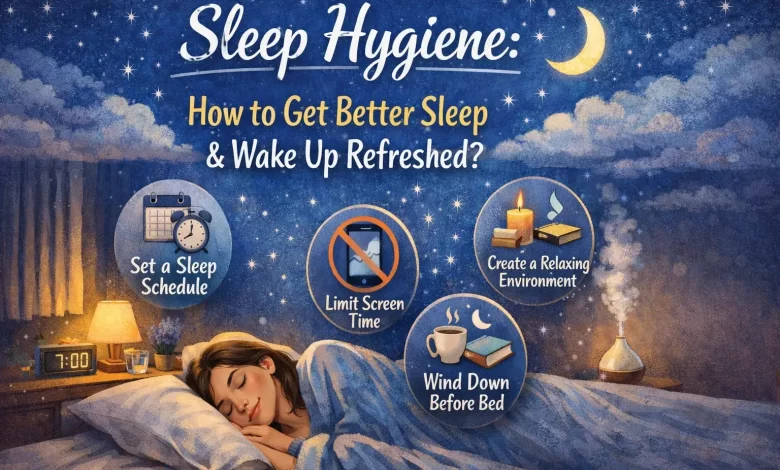
Sleep is not a luxury; it is a basic need, and many people struggle to get a good and restful sleep. You might have noticed that you are lying on your bed, feeling tired because of a busy day, but you are unable to relax your mind or fall asleep easily, and then you wake up feeling groggy and restless. This is the time when sleep hygiene will help you.
Sleep hygiene is not about being clean before bed. It is about some habits, behaviors, and environment that will help you get deep and steady sleep. When done in the right way, it can help you change how you sleep and how you feel in the morning.
In this blog, we will explain to you what sleep hygiene is, why it is important, what common mistakes you may make that are ruining your sleep, and some simple steps you can take tonight to sleep better and wake up refreshed.
First, let’s start with the basics.
What is Sleep Hygiene?
Sleep hygiene is basically a collection of daily routines and nighttime habits that help you provide yourself with high-quality sleep.
These habits help to regulate your body clock, calm your nervous system, and create the ideal conditions for falling asleep faster and staying asleep longer.
Good Sleep Hygiene Supports Through
- Better sleep quality
- Makes sleep faster
- Reduces your nighttime awakenings
- Improves your mood and focus
- Gives you better physical health
On the other hand, poor sleep hygiene can give you insomnia, fatigue, anxiety, weak immunity, and even long-term health problems.
Why is Sleep Hygiene so Important?
Your sleep affects almost every system in your body. When your sleep is poor, you will notice that everything else is suffering too, such as your energy, concentration, digestion, hormones, emotions, and immune system.
You may not know this, but strong sleep hygiene helps you through the following:
- It balances your stress hormones, such as cortisol.
- It improves your memory and learning.
- It supports your heart and brain health.
- It reduces your anxiety and depression.
- It boosts your metabolism and weight control.
In simple words, if you improve your sleep hygiene, you are improving your quality of living your life.
Common Signs of Recognizing Poor Sleep Hygiene
You can recognize whether you have poor sleep hygiene through some of the common signs mentioned below:
- Feeling tired even after 7-8 hours of sleep.
- It take more than 30 minutes to fall asleep.
- Wake up multiple times at night.
- Feel sleepy during the day.
- Depend upon caffeine to function properly at work.
- Anxious or restless at bedtime.
These are not just normal problems; they are the signs that your sleep habits need proper attention and care.
How does Sleep Hygiene Work?
Your body follows a natural 24-hour rhythm, which is called the circadian rhythm, and this internal clock of yours controls when you will feel awake and when you will feel sleepy.
Sleep hygiene helps you to align your daily habits with this rhythm. When your habits support your natural sleep cycle, falling asleep becomes easier and waking up feels more refreshing.
Core Principles of Having Good Sleep Hygiene
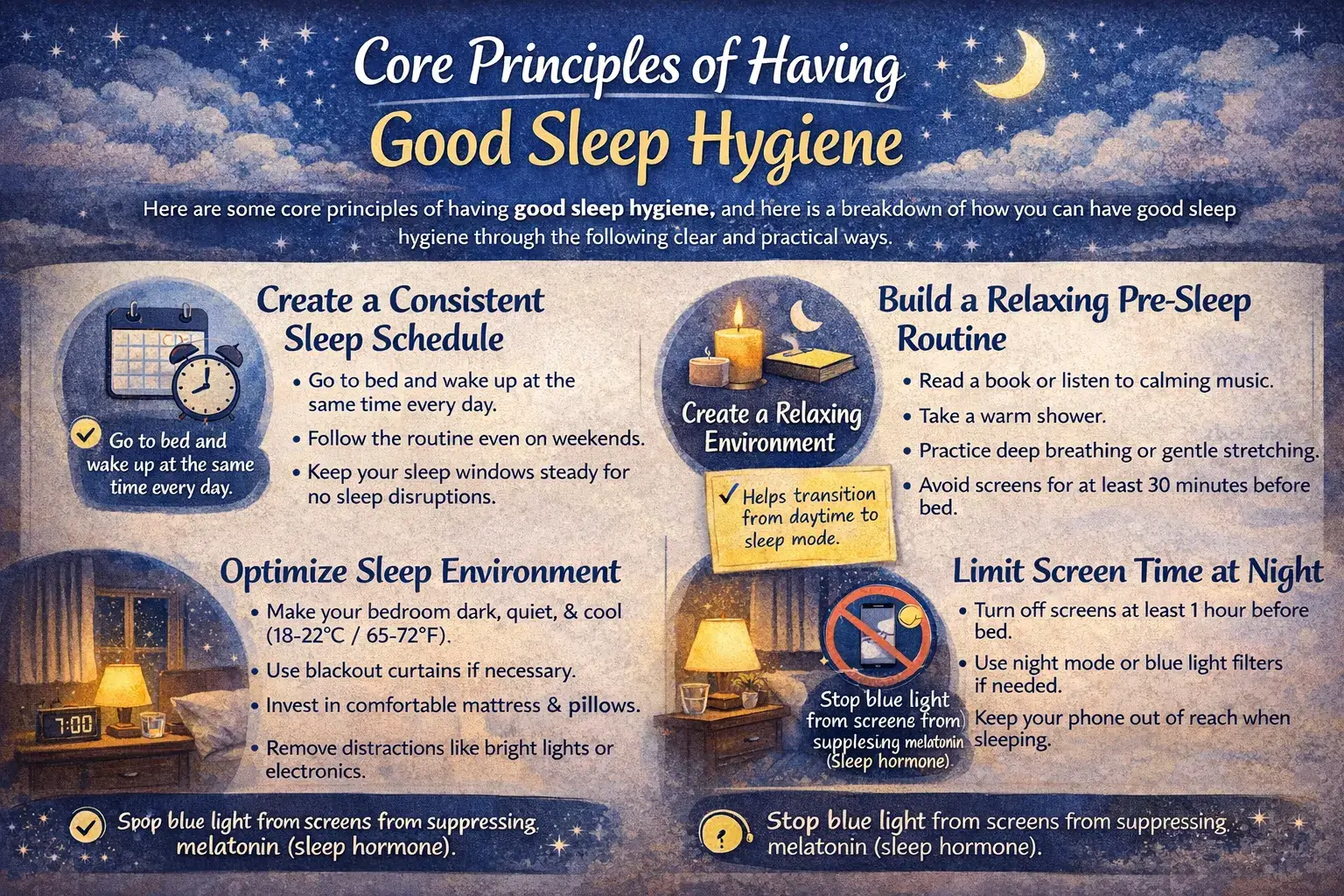
Here are some core principles of having good sleep hygiene, and here is a breakdown of how you can have good sleep hygiene through the following clear and practical ways.




1. Create a Consistent Sleep Schedule
Creating a consistent sleep schedule is one of the most important aspects of sleep hygiene.
– To create a consistent sleep schedule, you have to do the following:
- First, go to bed and wake up at the same time every day.
- Secondly, follow the routine even on weekends.
- Lastly, keep your sleep windows steady for no sleep disruptions.
This practice will train your brain to know exactly when it is your time to sleep.
– Why will it work?
Creating a consistent sleep schedule will help you to have good sleep hygiene because your body loves routine. A consistent schedule will help you by strengthening your circadian rhythm and improving your sleep quality naturally.
2. Build a Relaxing Pre-Sleep Routine
Your brain needs a transition period between your busy day and your sleep mode, and you need to build a relaxing pre-sleep routine for good sleep hygiene.
– Sleeping Habits Before Bed to have a Good Sleep:
- Read a book
- Take a warm shower
- Stretch Gently
- Practice Deep Breathing
- Write down your worries or next-day to-do lists before sleeping.
- Avoid screens and stimulating activities right before bedtime.
3. Optimize Sleep Environment
You have to optimize your sleep environment for good sleep hygiene, and your bedroom should only signal one thing and that should only be sleep.
– Ideal Sleep Hygiene Bedroom Setup for a Smooth Sleep:
- Room should be dark (try to use blackout curtains if needed)
- Room should be quiet
- Temperature of your room should be around 18-22°C/ 65-72°F
- Comfortable mattress and pillows
- Try to remove distractions like bright lights and unnecessary electronics.
4. Limit Screen Time at Night
Your phones, laptops, and TV screens emit blue light, which interferes with melatonin (your sleep hormone).
– Limit Screen Time:
- Stop using the screen 60 minutes before bed.
- Use night mode or blue-light filters if needed.
- Keep your phone away from your pillow.
5. Be Mindful of What you Eat and drink
Your food choices can directly affect your sleep hygiene. You must remember the following food choices before going to bed.
– Avoid the following Foods before Bed:
- Caffeine (coffee, tea, energy drinks)
- Nicotine
- Heavy or spicy meals
- Excess sugar
You can switch to the following better options, such as:
- Light snacks if needed (banana, yogurt, and nuts)
- Herbal teas such as chamomile or peppermint
Hydration is good, but you should avoid large amounts of water right before bed.
6. Move your Body, but at the Right Time
Doing regular physical activity improves your sleep hygiene and your sleep depth.
– Follow some Best Practices at the Right Time to Perform:
- Perform exercise earlier in the day.
- Avoid intense workouts close to your bedtime.
- Do gentle yoga or stretching at night.
Movements help you by regulating your sleep hormones and reducing your stress.
7. Manage Stress and Overthinking
Mental clutter is one of the biggest sleep killers.
Do following Sleep Hygiene for a Calm mind:
- Practice mindfulness or meditation.
- Write down worries before bed.
- Focus on slow and deep breathing.
- Avoid emotionally heavy conversations before bed late at night.
8. Use Bed Only for Sleep
This is a very powerful sleep hygiene rule that many people ignore.
Why does this sleep hygiene matter?
If you work, scroll, eat, or watch TV in bed, your brain will stop associating the bed with sleep.
You have to follow some best practices for maintaining your sleep hygiene:
You have to use your bed only for sleep and intimacy.
If you can’t sleep after 20-30 minutes, get up and do something calming.
These best practices will train your brain to sleep faster.
9. Be Smart About Naps
Your naps can help or hurt your sleep hygiene. You just have to follow some guidelines to manage your naps smartly:
- keep naps under 30 minutes.
- Avoid taking naps after late afternoon.
- Struggle with night sleeps then skip your naps.
You have to remember that some short naps can refresh you, but long naps can disrupt your nighttime sleep.
10. Be Patient and Consistent
You have to be patient and consistent, as improving sleep hygiene is not a one-night fix; it is a gradual process. You have to stick with healthy habits for at least 2-3 weeks to see real results. Your body needs time to reset and adapt.
Sleep Hygiene Myths Always Ignore
Myth 1: “I can catch up on sleep on weekend’s.”
Truth: Irregular sleep patterns can confuse your body clock.
Myth 2: “Alcohol helps me sleep.”
Truth: Alcohol disrupts your deep sleep stages.
Myth 3: “Watching TV relaxes me.”
Truth: Screens stimulate your brain more than you realize.
Final Thoughts
Sleep is not something you earn after a long day; it is something your body needs every day. Practicing good sleep hygiene is one of the most powerful, natural ways to improve your physical health, mental clarity, and emotional balance.
By creating simple routines, respecting your body’s rhythm, and building a peaceful sleep environment, you can transform your nights and your days naturally.
So start tonight, as your future, well-rested self will thank you later.