
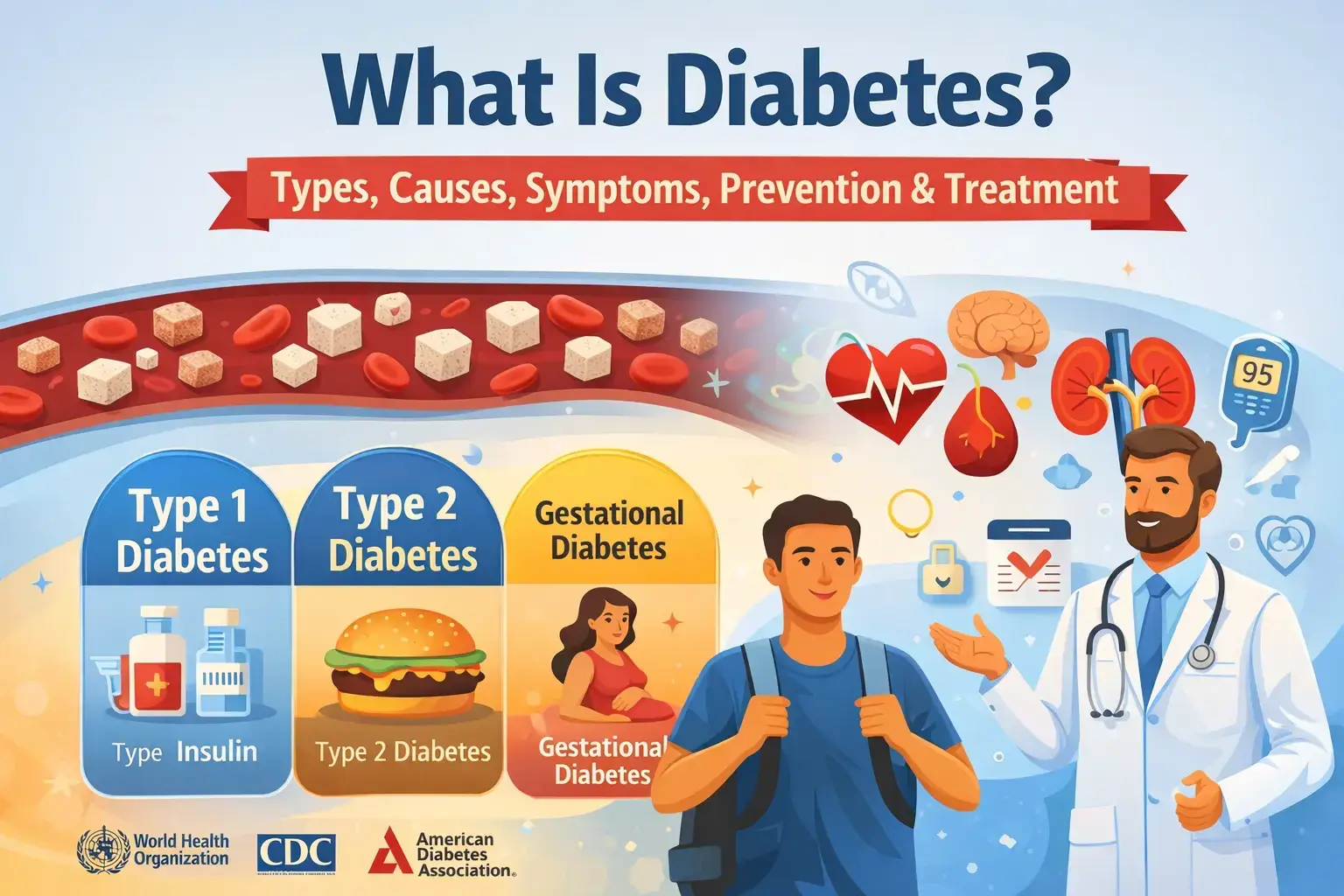
Diabetes is a chronic metabolic disease that affects how your body processes blood sugar (glucose). It is described by fasting rises of blood glucose levels and an incredibly increased risk of kidney disease, heart diseases, loss of nerve function and stroke.
Glucose is the primary source of energy for your body’s cells, and insulin – a hormone produced by the pancreas – helps move glucose from the bloodstream into cells. When your body either:
- Doesn’t produce enough insulin, or
- Cannot effectively use insulin (insulin resistance),
blood sugar levels rise, leading to hyperglycemia.
Diabetes can happen when the pancreas does not discharge enough insulin or if the cells of the human body become resistant to insulin. Insulin is a hormone that advances the uptake of glucose by the cells of the body.
Over time, uncontrolled diabetes can increase the risk of:
- Heart disease
- Kidney failure
- Stroke Nerve damage (neuropathy)
- Vision loss
According to the World Health Organization, diabetes is one of the leading causes of death globally, affecting hundreds of millions of people worldwide
Types of Diabetes
1. Type 1 Diabetes
Type 1 diabetes is an autoimmune condition in which the immune system attacks insulin-producing cells in the pancreas.
It was previously called:
- Insulin-dependent diabetes Juvenile diabetes
- It usually develops in children, teenagers, or young adults – but it can occur at any age.
Key Facts:
- The body produces little or no insulin
- Lifelong insulin therapy is required
- Accounts for approximately 5–10% of diabetes cases
According to the Centers for Disease Control and Prevention, people with Type 1 diabetes must monitor blood sugar regularly and take insulin daily.
2. Type 2 Diabetes
Type 2 diabetes is the most common form, accounting for about 90–95% of all diabetes cases worldwide.
In Type 2 diabetes:
- The body becomes resistant to insulin
- The pancreas may not produce enough insulin
Major Risk Factors:
- Overweight and obesity
- Physical inactivity
- Poor diet
- Family history
- Age over 45
- High blood pressure
Research published by Harvard T.H. Chan School of Public Health shows that sugary beverages significantly increase the risk of Type 2 diabetes.
Type 2 diabetes is often progressive. While many people manage it with:
- Weight loss
- Healthy eating
- Exercise
- Oral medications
Some may eventually require insulin therapy.
3. Gestational Diabetes
Gestational diabetes develops during pregnancy, usually around the 24th–28th week. It occurs when pregnancy hormones interfere with insulin function.




According to the National Institutes of Health, gestational diabetes increases the risk of:
- High birth weight
- Preterm birth
- Future Type 2 diabetes (for both mother and baby)
Many women manage it through diet and exercise, though 10–20% may require insulin or medication. Most cases resolve after childbirth – but ongoing monitoring is important.
Hope you got the answer to what is diabetes? and it’s type.
How to Cure and Prevent Diabetes
Diabetes is really a very dangerous disease. If diabetes is not controlled, it can lead to renal failure, loss of vision, amputation of limbs and cardiovascular diseases. Diabetes is such a disease that makes sugar to build up in our blood instead of being utilized by the cells as a part of our bodies.
In fact, our body utilizes a hormone (Insulin) to control the level of being utilized by the cells in our bodies. When our body does not create an adequate amount of insulin or when insulin doesn’t function or work properly, diabetes happens.
How to Prevent Type 2 Diabetes Naturally
While Type 1 diabetes cannot be prevented, Type 2 diabetes can often be delayed or prevented through lifestyle changes.
Here’s how:
1. Exercise Regularly
Exercise plays a very significant role not only in preventing the type II diabetes but managing it also. Regular exercise can reduce the sugar level in blood.
It also improves the production of insulin and strengthens the heart. Physical exercise for at least 60 minutes or more on six days a week is the best.

But even if we exercise for a little bit time is much better than none at all. Walking is also a simple and effective exercise that many people can enjoy. At least, take the stairs instead of elevators.
Physical activity improves insulin sensitivity and lowers blood sugar. The American Diabetes Association recommends:
- At least 150 minutes of moderate exercise per week
- Activities like walking, cycling, swimming, or strength training
- Even brisk walking 30 minutes daily significantly reduces risk.
2. Maintain a Healthy Weight
For maintaining a healthy weight, you should always try to make a balance between your intake of calories and expenditure of calories. So don’t try to take more calories than your body burns each day.
For maintaining your healthy weight your BMI should be between 18.5 To 24.9. If it is going up, start taking low calories or start doing aerobic exercise or burning extra calories so that BMI may remain at the proper level.
As a matter of fact, Losing even 5–7% of body weight can significantly lower diabetes risk, according to CDC research.
3. Reduce Saturated and Trans Fats
Reduce the intake of saturated fat if you want to prevent diabetes Type II. Indeed, intake of saturated fat in more amounts definitely leads to overweight or obesity which ultimately enhances the chances of occurring diabetes.

High intake of saturated fats contributes to obesity and metabolic dysfunction.
Limit:
- Processed foods
- Fried foods
- Red meats
Choose:
- Nuts
- Seeds
- Olive oil
- Fatty fish
4. Avoid Rich Carbohydrate Food
Carbohydrates are necessary for energy but if you want to prevent Type II diabetes, avoid rich carbohydrate food. However, it does not mean that you should not take carbohydrates.
It is necessary to increase the level of energy. So, just reduce its amount in the diet for preventing diabetes.
Prefer:
- Whole grains (oats, brown rice, barley)
- Legumes
- Vegetables
- Fruits
Avoid:
- Refined sugars
- White bread
- Sugary drinks
5. Eat Healthy Food
If you want to prevent diabetes, include plenty of vegetables, fruits and fiber-rich whole grains in your diet. When you take fruits and vegetables, try to take deeply colored vegetables and fruits such as spinach, berries, carrots, and peaches.

For taking whole grains, oatmeal, barley, brown rice, whole wheat, and corn are better to include in your diet. High-fiber diets improve blood sugar control. Include:
- Spinach
- Berries
- Carrots
- Whole wheat
- Oatmeal
Fiber slows glucose absorption and stabilizes blood sugar.
6. Eat Smaller, Balanced Meals
For preventing the high level of blood sugar, eat at least 5 to 6 small portions of meals a day rather than one big meal. Take small meals and don’t do over-eating.
Instead of one large meal:
- Eat 4–6 smaller meals daily
- Avoid overeating
- Balance protein, fiber, and healthy fats
Final Thoughts
Diabetes is a serious but manageable condition. With early diagnosis, lifestyle adjustments, proper medical care, and regular monitoring, individuals can live long, healthy lives.
If you suspect symptoms, consult a healthcare professional for testing and guidance.