
A missing tooth can impact everyday life in ways that go beyond appearance. Many people notice changes in their confidence, eating habits, speech and overall comfort after losing a tooth. While some individuals adjust to the gap, others look for a reliable solution that can restore both the function and appearance of their smile.
Modern dentistry offers several options for replacing missing teeth, including dental bridges, removable dentures, and dental implants. Among different tooth-replacement solutions, implants stand out because they are designed to address both the missing root and the visible tooth portion. This approach can provide stability, improved chewing ability and a more natural-looking result.
However, deciding whether implants are right for you requires understanding how the treatment works, who may benefit from it and what factors influence the success of the procedure.
For individuals searching for dental implants maple, learning about the benefits, process and important considerations can help them make a confident decision before starting treatment.
Understanding Dental Implants: How Do They Work?
Dental implants function as artificial tooth roots, providing a strong foundation for replacement teeth. They are usually made from biocompatible materials such as titanium, allowing them to integrate with the jawbone over time.
Unlike traditional tooth replacement methods that mainly restore the visible portion of the tooth, implants focus on rebuilding the foundation beneath the gum.
A complete dental implant restoration generally includes three parts:
– The Implant Post
The implant post is surgically positioned within the jawbone to replace the missing tooth root and create a stable foundation for the final restoration.
Once placed, the implant undergoes a healing process where it bonds with the surrounding bone. This provides a stable and secure foundation for the replacement tooth.
– The Abutment
The abutment serves as a connector between the implant post and dental crown, helping provide stable support for the visible restoration.
– The Dental Crown
The dental crown is crafted to closely replicate the appearance of a natural tooth. It is customized to match your surrounding teeth in size, shape and colour, helping create a balanced smile.
What Makes Dental Implants a Popular Choice for Replacing Missing Teeth?
Every tooth replacement option has different advantages. The right choice depends on your oral health, lifestyle, budget and personal goals.
Dental implants are often considered because they can address both the aesthetic and functional aspects of tooth loss.
– Restoring Natural Chewing Ability
A missing tooth can make chewing uncomfortable, especially when eating harder foods. Since implants are secured into the jawbone, they provide stability that allows many patients to enjoy a more natural biting and chewing experience.
– Preventing Teeth From Shifting
When a tooth is missing, nearby teeth may gradually move toward the empty space. This may affect the way the teeth align and make it harder to maintain proper oral hygiene.




Replacing the missing tooth can help maintain better spacing and support overall dental balance.
– Improving Smile Appearance
Tooth loss can create visible spaces that may influence confidence. Dental implants can be designed to match the surrounding teeth, helping restore a balanced and natural-looking smile.
– Supporting Jawbone Health
Natural tooth roots help stimulate and maintain the jawbone. After tooth loss, the bone in that area may gradually weaken because it no longer receives the same stimulation.
Because dental implants are anchored in the jawbone, they can help provide stable support in the treated area.
Are Dental Implants Suitable for Everyone?
Although dental implants are a popular solution, they are not automatically suitable for every patient. A dental professional can assess your oral health and determine whether dental implants are suitable for your individual needs.
Several factors are considered during the evaluation.
– Sufficient Bone Support:
Adequate jawbone support is necessary for the successful placement of a dental implant. If significant bone loss has occurred, additional procedures may sometimes be recommended before implant treatment.
– Healthy Gums:
Strong gum health is essential because the tissues surrounding the implant help protect and support the restoration. Existing gum problems may need to be addressed before implant placement.
– Overall Health and Healing Ability:
Certain health conditions, medications or lifestyle habits may influence healing. Your dental provider will review your medical history to create a safe and suitable treatment approach.
– Good Oral Hygiene Routine:
Dental implants require regular care. Patients who maintain proper brushing, flossing and professional dental visits are better positioned to protect their investment.
What Should You Expect During the Dental Implant Process?
Understanding each stage of treatment can help reduce uncertainty and prepare you for the journey.
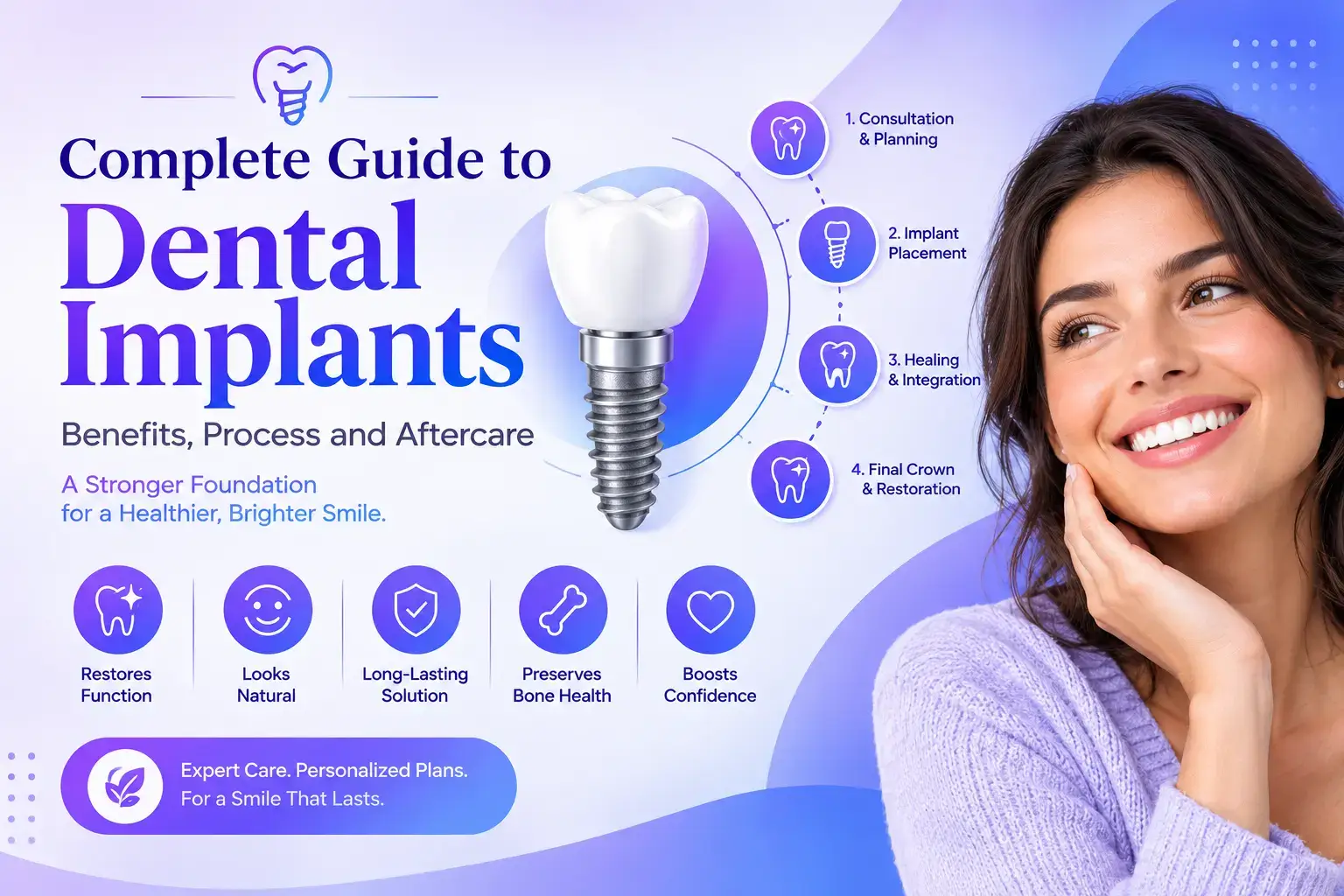
Step 1: Dental Consultation and Planning
The process begins with a detailed examination. Your dentist will evaluate your teeth, gums, jawbone structure and bite. This stage may include:
- Digital X-rays or scans
- Discussion of treatment goals
- Review of available options
- Planning the implant placement process
A personalized treatment plan is created based on your individual needs.
Step 2: Implant Placement
During implant placement, the titanium post is carefully inserted into the jawbone and given time to heal and securely integrate with the surrounding bone.
The length of the healing period varies depending on factors such as bone quality and an individual’s overall health.
Step 3: Attaching the Final Tooth Restoration
Once the implant has fully healed, the abutment is attached and a custom-made crown is placed. The dentist checks the fit, comfort and bite to ensure the restoration functions properly.
How Do Dental Implants Differ From Dentures and Dental Bridges?
Choosing between tooth replacement options requires understanding the differences.
– Dental Implants
Dental implants are fixed restorations supported by the jawbone. Dental implants can replace individual missing teeth or help support more extensive restorations. Potential advantages include:
- Stable fit
- Natural appearance
- Improved chewing function
- Support for jawbone structure
– Dental Bridges
A dental bridge fills the gap created by missing teeth by using nearby teeth for support. Bridges can be effective for many patients, especially when neighboring teeth already require restoration.
– Dentures
Dentures are removable dental appliances designed to replace several missing teeth. They can be a practical option depending on the patient’s needs.
A dentist can help compare these options and recommend an approach based on your oral condition.
What Factors Affect Dental Implant Success?
Dental implant outcomes depend on several important factors rather than one single element.
- Proper Treatment Planning: Accurate evaluation and careful planning help determine the correct implant position and restoration design.
- Maintaining Oral Health: Regular dental care helps identify potential problems early and protects both natural teeth and implant restorations.
- Following Aftercare Instructions: After implant placement, following professional recommendations regarding cleaning, diet and follow-up appointments supports proper healing.
- Lifestyle Habits: Smoking and poor oral hygiene may negatively affect healing and implant health. Discussing lifestyle factors openly with your dentist helps create a more effective treatment plan.
How Should You Care for Dental Implants After Treatment?
Dental implants do not require complicated maintenance, but they do require consistent care.
Helpful habits include:
- Brush twice daily with a suitable toothbrush
- Clean between teeth using floss or recommended tools
- Attend regular dental check-ups
- Avoid using teeth as tools to open objects
- Follow professional cleaning recommendations
Although implants are artificial tooth replacements, the surrounding gums and supporting tissues still require attention.
Questions to Ask Before Choosing Dental Implants
Before beginning treatment, it is helpful to have a clear conversation with your dental provider.
Consider asking:
- Am I a suitable candidate for dental implants?
- How long will my treatment take?
- Are there alternative replacement options?
- What type of aftercare will be required?
- What factors may affect my results?
Having detailed information allows you to choose a treatment option that aligns with your needs.
Finding the Right Dental Care Provider for Implant Treatment
The quality of your dental implant experience depends greatly on choosing a provider who focuses on careful planning, patient communication and comprehensive care. When researching options, consider looking for:
- Experience with restorative dentistry procedures
- A clear explanation of treatment choices
- Modern diagnostic methods
- A comfortable patient experience
- Ongoing dental support after treatment
Replacing missing teeth is a personal decision that should be based on your oral health, comfort needs, and long-term goals. Dental implants can provide a stable and natural-looking solution for many patients who want to restore their smile and improve daily function.
For patients exploring dental implants maple, Maple Dental Centre focuses on providing personalized dental care and helping individuals understand their available restorative options. As a trusted maples dental clinic, the practice supports patients with modern dental solutions designed around comfort, function and long-term oral wellness.
A professional consultation with Maple Dental Centre can help determine whether dental implants are the right choice for your missing teeth and what treatment approach best fits your smile goals.
Frequently Asked Questions About Dental Implants
1. How long does a dental implant last?
With proper oral hygiene, routine dental visits and appropriate care, dental implants can provide long-term tooth replacement support. The lifespan may vary depending on individual health and maintenance.
2. Are dental implants painful?
Most patients experience minimal discomfort during the procedure because local anesthesia is used. Some temporary swelling or sensitivity may occur during recovery.
3. How long does it take to complete dental implant treatment?
The timeline depends on healing requirements, bone condition and the number of implants needed. Some cases may take several months from placement to final restoration.
4. Can dental implants replace multiple missing teeth?
Yes. Dental implants can support different types of restorations, including solutions designed for multiple missing teeth.
5. Are dental implants easier to maintain than dentures?
Dental implants are cared for similarly to natural teeth with regular brushing, flossing and dental check-ups. Unlike removable dentures, implants remain fixed in place.
SEO-Friendly Slug: