

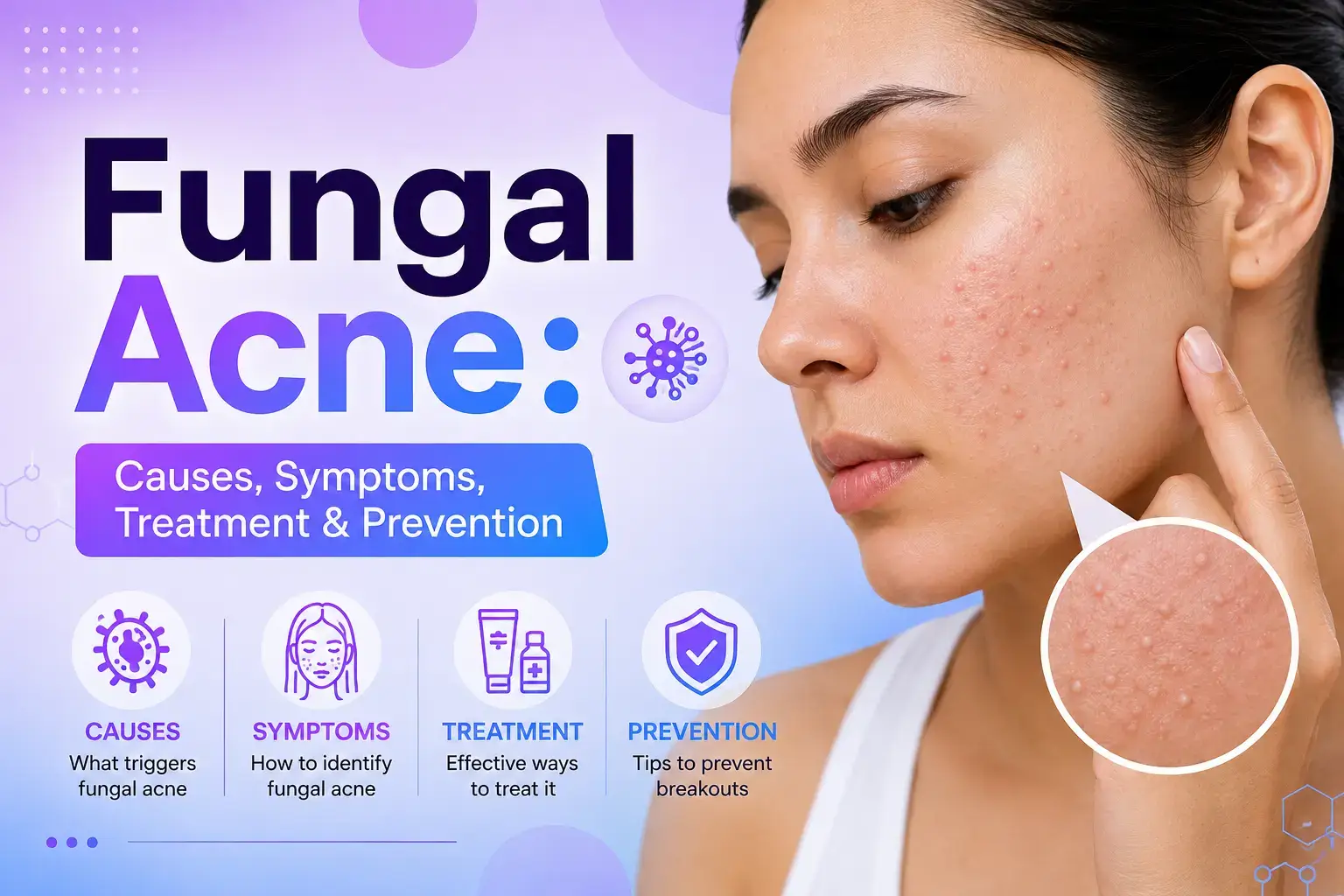
Fungal acne, Malassezia folliculitis, itchy acne bumps, acne-like fungal infection, fungal acne treatment, clogged hair follicles, and yeast overgrowth are becoming some of the most researched and skincare topics because many people mistake fungal acne for regular acne, and then they end up using the wrong treatments for months.
If you have tiny, itchy bumps on your forehead, chest, back, scalp or shoulders that are not improving with regular acne products, then there is a great possibility that you are dealing with fungal acne instead of traditional acne.
The skin condition is very common, especially in people with oily skin, people living in hot and humid weather, gym-goers, and anyone who sweats a lot.
The frustrating part for anyone is that fungal acne often looks almost the same as normal acne. Because of this reason, many people spend money on acne creams, exfoliators, and harsh products that only make the problem worse.
The good news for you is that fungal acne is treatable, and once you understand what causes it and how to care for your skin properly, you can usually see improvement much faster than you expected.
In this blog, you’ll learn exactly what fungal acne is, what it looks like, what causes it, how to get rid of it, and the best treatment options backed by research and dermatologists.
Let’s start with the basics first…
What Exactly is Fungal Acne?
Fungal acne is a skin condition caused by an overgrowth of yeast inside the hair follicles. Even though the name says “acne,” it is not actually traditional acne.
The medical name for fungal acne is Malassezia folliculitis or Pityrosporum folliculitis. It happens when a type of yeast called Malassezia grows too much on the skin and enters the hair follicles, causing inflammation and breakouts.
Unlike your regular acne, which is usually caused by bacteria, oil, clogged pores, and hormones, fungal acne is linked to yeast overgrowth. This is why normal acne products often fail to work.
In many cases, harsh acne products can actually irritate the skin barrier and make fungal acne even worse.
Important Things to Know about Fungal Acne
Before we go into the depths of treating fungal acne, you should be aware of some important things about fungal acne.
You must know that:
- It is caused by yeast, not bacteria.
- It usually appears as tiny bumps of similar size.
- It is commonly itchy.
- It often shows up in clusters.
- Sweat and humidity can trigger it.
- Regular acne treatments may not help.
- Antifungal treatments are usually needed.
According to the Cleveland Clinic, “fungal acne is an infection in hair follicles that’s often confused with common acne.” The clinic also explains that the condition commonly causes “small, itchy, red bumps.”
A review published in the National Library of Medicine states that Malassezia (Pityrosporum) folliculitis is a fungal acneiform condition commonly misdiagnosed as acne vulgaris.

What does fungal acne look like?
One of the biggest reasons fungal acne is hard to identify is that it looks very similar to regular acne. However, there are a few clear signs that can help you know the difference between fungal acne and regular acne.
Fungal acne usually appears as:
- Small red bumps
- Tiny whiteheads filled with pus
- Clusters of bumps that look very similar in size
- Itchy acne-like breakouts
- Rash-like texture on the skin
- Inflamed hair follicles
The bumps are often uniform, which means they all look nearly the same. Regular acne usually contains different types of blemishes like blackheads, cysts, and large pimples.
Areas where fungal acne commonly appears
Fungal acne often develops in warm and sweaty areas of the body, such as:
- Forehead
- Hairline
- Chin
- Chest
- Upper back
- Shoulders
- Neck
- Upper arms
Symptoms that Make Fungal Acne different
Here are some major clues that will help you know your breakouts might actually be fungal acne:
1. Your skin feels itchy
This is one of the biggest signs of fungal acne. Regular acne is usually painful or tender, but fungal acne is often itchy.
2. Acne products are not working
If benzoyl peroxide, salicylic acid, or acne face washes are not helping after weeks or months, then fungal acne could be the reason behind it.
3. Breakouts get worse with sweat
Many people notice their skin flares and more breakouts after:
- Gym workouts
- Hot weather
- Wearing tight clothes
- Sweating for long periods
4. Tiny uniform bumps
Fungal acne bumps are usually very similar in shape and size. Research published in PubMed Central describes fungal acne lesions as “monomorphic papules and pustules,” meaning the bumps usually look nearly identical.
What causes fungal acne?
Fungal acne happens when yeast grows too much inside your hair follicles. While the yeast naturally exists on everyone’s skin, certain conditions allow it to multiply rapidly.
Once the balance of the skin microbiome is disturbed, fungal acne can easily appear.
Common causes of fungal acne
- Hot and Humid Weather
- Yeast thrives in warm and moist environments.
- Summer
- Humid climates
- Excessive sweating
Here are some common causes behind fungal acne
1. Sweating too much
Sweat creates the perfect environment for yeast growth. People who exercise often or stay in sweaty clothes for long periods are more likely to experience fungal acne breakouts.
2. Tight clothing
Tight workout clothes trap heat and moisture against the skin, which can irritate hair follicles and encourage yeast overgrowth.
3. Oily skin
Extra oil production creates an environment where Malassezia yeast can grow more easily.
4. Antibiotic use
Antibiotics can disrupt the natural balance of bacteria on your skin. When healthy bacteria decrease, yeast can grow uncontrollably.
5. Weak immune system
People with weakened immune systems may have a harder time controlling yeast growth.
6. Heavy skincare products
Certain oily moisturizers, sunscreens, and makeup products may worsen fungal acne. You must check and test before its regular use.
Can stress cause fungal acne?
Stress itself may not directly cause fungal acne, but it can weaken the skin barrier and increase oil production, which may trigger flare-ups and cause more fungal acne.
How to get rid of fungal acne?
Getting rid of fungal acne usually requires a different approach than treating regular acne. The biggest mistake people make is continuing to use harsh acne treatments that do not even target yeast.
Step 1: Use antifungal products
Using Antifungal products is usually the most important step you have to follow. A Los Angeles-based board-certified dermatologist, Dr. Ramya Garlapati, also stated, “You don’t need to search for a skin care product that contains these ingredients, as an anti-dandruff shampoo can also be utilized as a face or body cleanser”.
For your antifungal products, you need to buy products with ingredients such as:
- Ketoconazole
- Selenium sulfide
- Zinc pyrithione
- Clotrimazole
Step 2: Keep your skin dry
Yeast grows best in moist conditions. You need to practice some helpful habits to reduce your fungal acne:
- Showering after workouts.
- Changing sweaty clothes quickly.
- Wearing breathable fabrics.
- Avoid staying in wet clothes.
Step 3: Avoid heavy oil-based products
Some oils and thick skincare products can feed yeast growth. Try switching to lightweight, non-comedogenic skincare products.
Step 4: Simplify your skincare routine
Using too many active ingredients can irritate your skin.
A simple routine usually works best for you:
- Gentle cleanser
- Lightweight moisturizer
- Antifungal treatment
- Sunscreen
Step 5: Wash pillowcases and towels regularly
Dirty fabrics can easily hold sweat, oil, and yeast.
You need to:
- Change pillowcases frequently.
- Use clean towels.
- Avoid sharing personal items.
Step 6: Avoid scratching the skin
Scratching can irritate the follicles and increase inflammation.
Step 7: Watch your diet
There is still limited research about diet and fungal acne. Some people notice flare-ups after consuming:
- Excess sugar
- Alcohol
- Highly processed foods
So, eating a balanced diet can help to support your overall skin health.
How to Treat Fungal Acne?
Fungal acne treatment completely depends on how severe the fungal acne is. Mild cases may improve with topical antifungal products, while the stubborn or widespread breakouts may need prescription medication.
Topical treatments for fungal acne:
Ketoconazole shampoo
This is one of the most commonly recommended fungal acne treatments. Many people use ketoconazole shampoo as a face or body wash several times a week.
Selenium sulfide wash
This ingredient is commonly found in anti-dandruff shampoos that help to reduce yeast growth.
Antifungal creams
Dermatologists may recommend creams that contain:
- Clotrimazole
- Econazole
- Ketaconazole
Oral antifungal medications
More severe fungal acne may need prescription antifungal medication. Some common oral antifungal medication options are:
- Fluconazole
- Itraconazole
These medications should only be used under medical supervision.
According to WebMD’s overview of Fungal Acne, “oral antifungals seem to work the best because the yeast may be deep in your hair follicle, where a cream may not reach”.
How long does fungal acne take to go away?
Some people notice improvements within a few weeks. However, some recovery depends on
- Severity of the fungal condition
- Consistency of the treatment taken
- Your skincare routine
- Lifestyle habits
For stubborn cases, it can take several months to fully clear.
Can fungal acne come back?
Yes, fungal acne can return, especially if its triggers are still present.
Recurrence of fungal acne is common in people who:
- Sweat heavily
- Live in humid climates
- Use antibiotics frequently
- Wear tight clothing often
This is why prevention matters just as much as treatment.
Best tips to prevent fungal acne after a shower, after sweating
To prevent fungal acne after a shower, after sweating, you need to follow some best tips:
- Don’t stay in sweaty clothes for hours.
- Wear loose and breathable clothing such as cotton fabrics that can help to reduce trapped moisture.
- Avoid overusing antibiotics and only use them when prescribed.
- Use lightweight skincare products, as heavy oils can worsen fungal acne in some people.
- Keep your hair products away from your face because hair oils and styling products can contribute to clogged follicles.
- Clean your gym clothes frequently because dirty workout clothes can trap sweat and yeast.
When should you see a dermatologist?
You should consider seeing a dermatologist when:
- Your acne is extremely itchy
- Acne products are not helping
- Breakouts keep returning
- You have painful inflammation
- Your skin becomes irritated or infected
A dermatologist can properly diagnose your fungal acne and recommend the right treatment plan for you.
Final Thoughts
Fungal acne is one of the most misunderstood skin conditions because it looks so similar to regular acne. Many people spend months treating the fungal acne the wrong way without realizing that the real issue is yeast overgrowth inside their hair follicles. The good thing is that fungal acne is manageable once you know what triggers it and how to treat it properly.
A skincare combination of antifungal treatments, gentle skincare, proper hygiene, and lifestyle changes can make a huge difference for you. If your skin is not responding to the recently bought regular acne products, then it is now the right time to switch to fungal acne products, as it is the real problem.
Most importantly, you have to be patient with your skin as healing takes time, and using simple, consistent care usually works much better than trying dozens of harsh products at once.
