
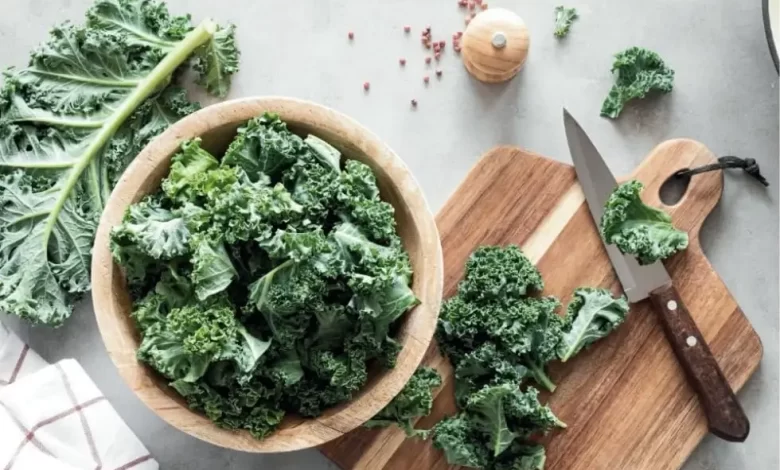
Kale is having a moment right now. And while many other health food fads come and go, kale has been a steady player on the superfoods list.
Honestly, I wasn’t a big supporter of kale when all my health conscious friends were going nuts for it. From kale salads to kale chips and everything in between, I just couldn’t get excited about kale, yet it seemed to be everywhere.
But my inquisitive nature got the best of me and I had to see what all the hype was about. That’s when I discovered all the incredible health benefits associated with eating kale. It changed my mind about it and might just change yours too.
Here are my top 13 favorite benefits and reasons to eat kale.
Amazing Benefits and Reasons to Eat Kale
1. Kale is the MVP of Superfoods
Kale is a member of the cruciferous vegetable family, which means it’s related to other dark green leafies like spinach and collards. It’s also in the same family as broccoli, arugula, and Brussels sprouts. What’s this family most famous for?
Well, cruciferous foods are some of the healthiest foods to eat on the planet, making them one of the ultimate superfoods. A quick Google search of the word superfood leads us to define them as “nutrient-rich foods considered to be especially beneficial for health and well-being”.
In just 1 cup of raw kale, you’ll find:
- 36 calories
- 2 g of protein
- Zero fat
- Zero sugars
- All nine essential amino acids (plus nine non-essential ones)
- 684% of your recommended daily intake (RDI) of vitamin K (1180% when cooked)
- 206% of your RDI of vitamin A (98% when cooked)
- 134% of your RDI of vitamin C (71% when cooked)
The USDA recommends eating 1.5 to 2 cups of dark green vegetables like this every week. Personally, I’d double that if you’re trying to eat healthier and lose weight. Kale fills you up for virtually no calories so it would really help to sneak more of it into your diet.
And if those nutrition percentages aren’t enough, kale is filled with amazing antioxidants.
2. Chock Full of Antioxidants
According to the oxygen radical absorbance capacity, a method used to measure antioxidant amounts, kale is at the top of the green vegetables chart. Ruth Frechman, R.D., comments that kale scores at 1,770 units while spinach clocks in at less than 1,500.
What’s that mean?
Superfoodly explains that “an antioxidant is a molecule that prevents the oxidization of other molecules. Oxidization leads to the formation of free radicals, which eventually cause cell death or damage”.
Having a plethora of antioxidants in your body is critical to keeping your cells healthy. Tina Paymaster, an ‘ambassador’ for National Kale Day says: “Antioxidants are incredibly important to help remove free radicals from the body that can lead to accelerated aging as well as serious diseases such as cancer”.
3. Vitamin A: Protect your Eyes from Degeneration
Vitamin A is most praised for its ability to strengthen our eyes, especially our night vision, and kale just happens to be abundant in it.



The American Optometric Association states that “age-related macular degeneration is the leading cause of blindness in people over age 55 in the Western world and the incidence is expected to triple by 2025”.
So how can we prevent this?
By eating more kale.
Besides a rich amount of vitamin A, kale also contains lutein and zeaxanthin. Since our body doesn’t synthesize the lutein and zeaxanthin it needs to fight off the free radicals in our retinas, we need to consume 12 mg of lutein and zeaxanthin via our diets.
Conveniently, kale contains 11 mg of lutein and zeaxanthin per serving. Cook that same serving of kale and you up your lutein and zeaxanthin to 23.8 mg.
When our bodies get enough lutein and zeaxanthin, they act like antioxidants and protect our eyes from cataract growth and reduce our risk of developing age-related macular degeneration.
4. Vitamin C: Healthy Skin and Immunity Booster
Like I mentioned before, one cup of kale has 134% of your RDI of vitamin C, which is more than what you’ll find in an orange (which has 113% of your RDI).
The benefits of vitamin C have been touted for years. It helps with cell repair and the appearance of healthy, strong skin. Vitamin C is said to boost collagen in the skin so it seems strong and supple. Low vitamin C levels actually stop collagen from generating, leaving our skin weak and prone to cuts.
Research suggests that vitamin C may also function as natural sunblock, which would prevent our skin from becoming damaged by the sun’s harmful rays.
We all know that vitamin C deficiencies include a weakened immune system, which leaves our bodies susceptible to illnesses. Since it contains zero sugar, kale may actually be more beneficial during cold season than having that glass of orange juice.
5. Vitamin K for Bone Health and Cell Growth
The RDI values for raw kale are higher in most categories with the exception of vitamin K. This vitamin actually improves when cooked and raises from 684% of your RDI to 1180%.
Vitamin K triggers proteins in our body to activate cell production in our bones, lungs, and heart.
Vitamin K is beneficial to our bodies because it inhibits artery hardening and can also prevent certain cancers. In a study published in the Journal of Gastroenterology and Hepatology, it was discovered that “K vitamins can inhibit the survival of some pancreatic cancer cell lines”.
There is one thing to note about vitamin K and kale: if you’ve had a stroke or are on blood thinners, speak with your doctor first before going on a binge eating. Since foods high in vitamin k, like kale, have great blood-clotting abilities, this may interfere with your prescriptions that do the opposite.
6. Helps Control Diabetes
Kale has 7 g of fiber per 100 calories. Fiber’s not only amazing at keeping you full and curbing your appetite, but it’s also helpful for controlling diabetes.
If you’re diabetic and your blood sugar becomes too high, the sugar “builds up in your blood and combines with your hemoglobin, becoming glycated”. The HbA1c test then measures an average of how much sugar is in your blood, giving you an average percentage from the last 3 month period.
A study in The Journal of the American Board of Family Medicine discovered that when you increase dietary fiber in patients with type 2 diabetes, fasting blood glucose and HbA1c levels both decrease.
7. Copper is Part of a Healthy Diet…Really
According to LiveStrong, copper stimulates cytochrome c oxidase, an enzyme that propels our cells to take the nutrients from our food and use them as energy in our bodies. Copper “also plays an important role in tissue health, by supporting collagen maturation, a process important for strong healthy blood vessels and bones”.
Eating a single cup of kale will provide your body’s entire copper requirement for the day.
8. High in Magnesium
The dark green chlorophyll of kale houses an important mineral that most people don’t get enough of, magnesium.
Magnesium does a lot for our bodies without getting enough credit. It’s crucial for helping us de-stress, aids in digestion, and balances our calcium levels. Magnesium helps convert vitamin D so our bodies can absorb it as calcium. And kale is full of both magnesium and calcium.
9. Calcium in Kale is Better than Dairy
Here’s something I didn’t expect, kale actually has more bioavailable calcium than milk. Sayer Ji for Dr. Mercola writes that for “every gram of kale there is 1.35 mg of calcium. For every gram of whole milk, there is 1.13 mg”.
While those numbers may seem similar (and that’s incredible alone), what’s really important here is that kale doesn’t contain casein, the protein in milk that’s often hard for many people to digest.
A study in the American Journal of Clinical Nutrition confirms that getting calcium solely from dairy products is dangerous because “casein, calcium, lactose, saturated fat, and cholesterol” all contribute to poor health, but all of the same “nutrients found in milk are readily available in healthier foods from plant sources”.
Unlike its relative spinach, kale has a very low oxalate content. Jack Norris R.D., says that “when vegetables have high oxalate content, they bind calcium and prevent absorption from the digestive tract”.
Even the National Osteoporosis Foundation endorses kale because calcium strengthens our bones and prevents bone loss.
10. High in Omega-3s
According to an article on Huffington Post, “kale is actually a great source of alpha-linoleic acid (ALA), the omega-3 fatty acid that’s essential for brain health, reduces Type 2 diabetes risk and boosts heart health as well”.
Kale is one of the few foods that has more omega-3 fatty acids than omega-6s. Omega-3s and omega-6s both utilize the same enzymes in our body. As Chris Kresser explains that “a diet of a lot of omega-3 and not much omega-6 will reduce inflammation”. While on the other hand, a diet plentiful in omega-6 will encourage inflammation.
Further, the Mayo Clinic says that: “There have also been promising results from studies looking at omega-3 for cancer, depression, and attention-deficit hyperactivity disorder (ADHD)”.
11. Lower Cholesterol Levels
Since kale is so fibrous, those nutrients actually bind with cholesterol compounds and bile acids in our digestive system to help eliminate them from our system.
According to George Mateljan Foundation’s World’s Healthiest Foods website, since these bile acids and cholesterol compounds are being passed out of our body instead of being absorbed, “our liver needs to replace the lost bile acids by drawing upon our existing supply of cholesterol, and, as a result, our cholesterol level drops down”.
Although raw kale has cholesterol lowering properties, a study published in Nutrition Research discovered that “steam cooking significantly improved the…bile acid binding of…kale…compared with previously observed bile acid binding values for these vegetables raw”. Improved bile acid binding means more cholesterol is eliminated from our bodies.
WHFoods elaborated that when steamed kale was compared with a cholesterol-lowering drug, “kale bound 42% as many bile acids”. I don’t know about you, but I love hearing results like this; the more natural remedies we discover, the better in my book.
12. Kale for Cancer Prevention
Last, but certainly not least, kale has been known to fight cancer. All cruciferous vegetables contain glucosinolate phytonutrients, which are part of the isothiocyanates (ITCs) family. The two ITCs in kale most widely studied are indole-3-carbinol and sulforaphane.
According to the National Institute of Cancer (NIC), these compounds may:
- Help protect cells from DNA damage
- Inactivate carcinogens
- Have antiviral and antibacterial benefits
- Have anti-inflammatory properties
- Induce cell death (apoptosis)
- Inhibit tumor blood vessel formation and tumor cell migration (needed for metastasis)
The NIC further states that, “one study found that indole-3-carbinol was more effective than placebo in reducing the growth of abnormal cells on the surface of the cervix”.
But that’s not all.
Research published in Molecular Cancer proved that sulforaphane “induces growth arrest and apoptosis” in epithelial ovarian cancer cells. One study in Gynecologic Oncology examined women who were diagnosed with early stage cervical cancer. They were divided into three groups; one group received a placebo and the others received either a 200 mg dose of indole-3-carbinol (IC3) or a 400 mg dose. The women were given their supplements once every day for 12 weeks.
You want to know something incredible?
Four of the eight women taking the 200 mg IC3 and four of the nine women taking the 400 mg IC3 “had complete regression”. Conversely, none of the women taking the placebo had complete regression.
Integrative Oncology says that sulforaphane:
- Helps prevent the development of cancer by shutting-off crucial genes that are important in promoting the transformation of abnormal cells into cancer cells.
- Reduces the number of cancer stem cells, considered the most difficult cell type in most cancers to eradicate.
- Blocks the formation of tumor blood vessels and suppresses cancer cell metastases.
- Promotes the excretion of carcinogens from the body and reduces their formation in the body.
So now that we know how unbelievably wonderful kale is, how can we eat more of it?
Kale Pro Tips
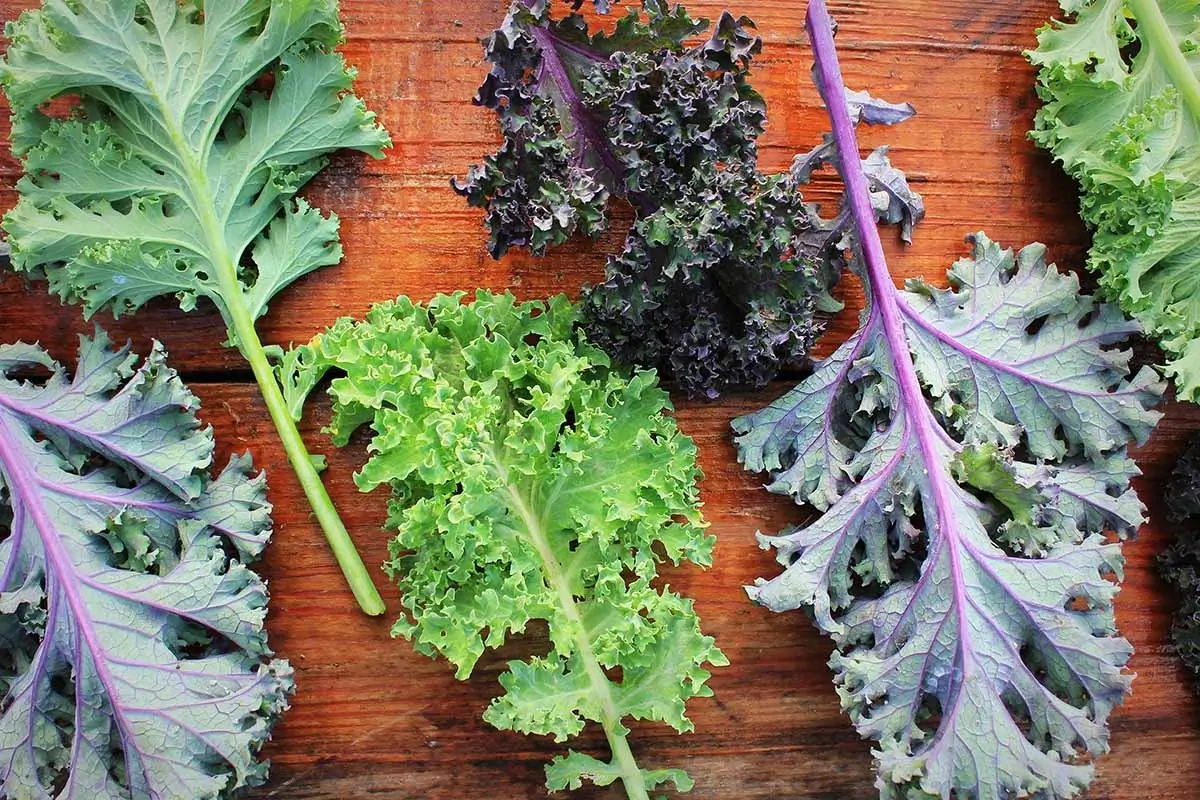
When you shop for kale, make sure to buy with your eyes. Look out for deep green leaves and sturdy stalks as these both suggest peak health. When you take it home, it loves to live in the cold parts of your refrigerator bundled loosely in plastic wrap.
Kale salads are the easiest way to get your recommended daily serving. But have you ever tried replacing spinach with kale in your smoothies? Being such a great superfood, it’s perfect for this.
I also like to add to hearty soups; just make sure you toss the kale in towards the end so you’re not cooking all of the nutrients out of it. It just takes a few minutes to soften, but the flavor and health benefits are so worth it.
Ever try making your own kale chips? They’re pretty easy to do.
- Preheat your oven to 350 degrees, wash and dry it, and line a baking sheet with parchment paper.
- Cut the kale leaves into snack-sized, potato chip-like pieces. In a bowl, mix the kale, a bit of olive oil, and a pinch of salt.
- Pour the mixture on the baking sheet and spread in a single layer. Bake for about 10 or 15 minutes. Look for the edges to brown and make sure you don’t burn them. Make sure you watch these babies because it can happen quick.
Voila! Crispy, Chips to snack on during the day instead of greasy potato chips.
I hope I’ve inspired you to give kale another chance. As you can see from this list of my top 12 reasons to eat more kale, there’s so many astonishing health benefits packed in such a simple, easy to grow vegetable. It’s truly a wonderful superfood.
So how do you feel about the superfood now? I’d love to hear some of your best recipes!